
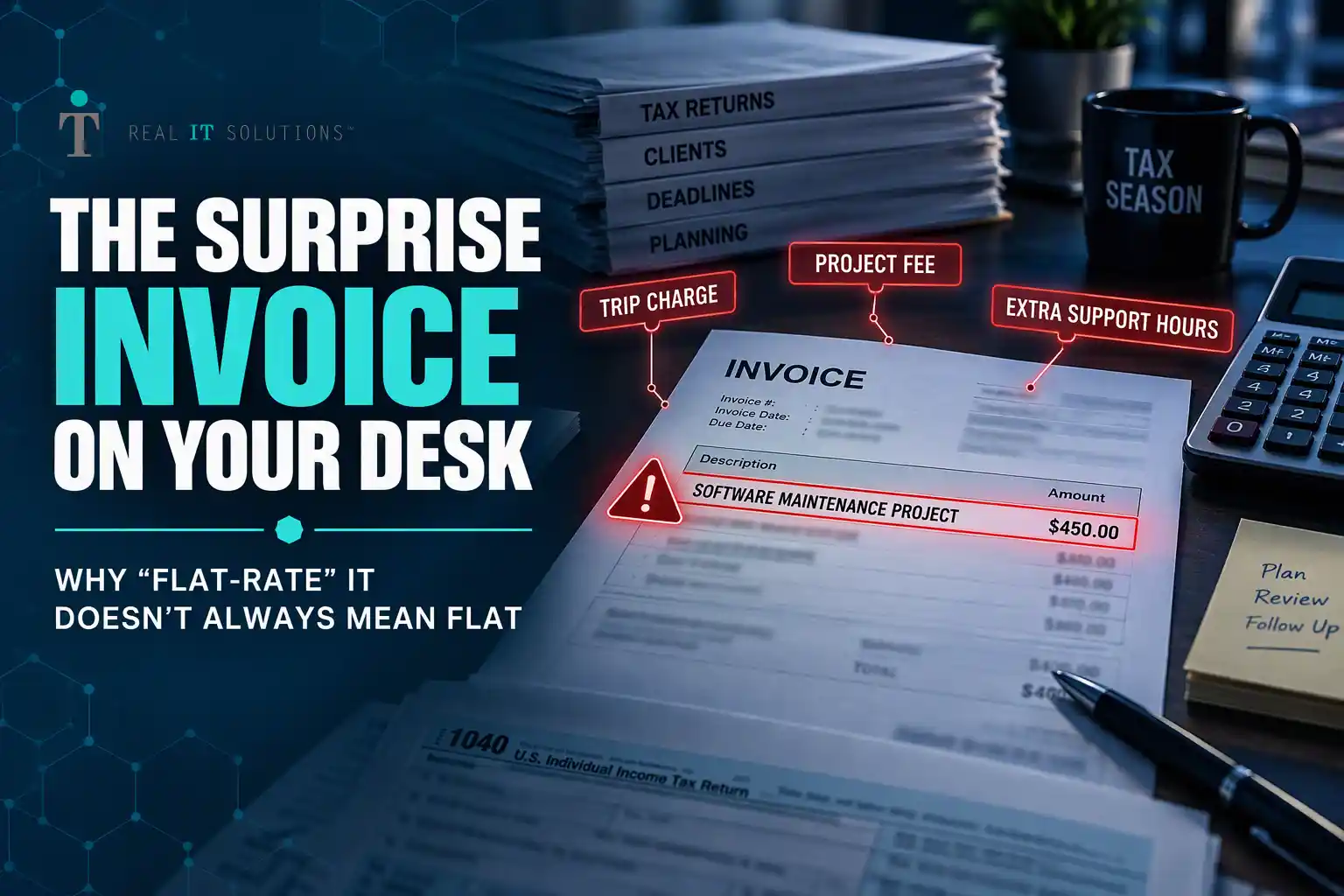
It’s 2:00 PM on a Tuesday in March. A staff accountant’s CCH Axcess update throws an error mid-return. She calls IT. Twenty minutes later the issue’s fixed, and a week later her office manager finds a $450 line item on the invoice labeled “software maintenance project.”
Nobody told her that update would cost extra. Her firm’s IT contract says “flat-rate.” It just doesn’t say flat-rate for everything.
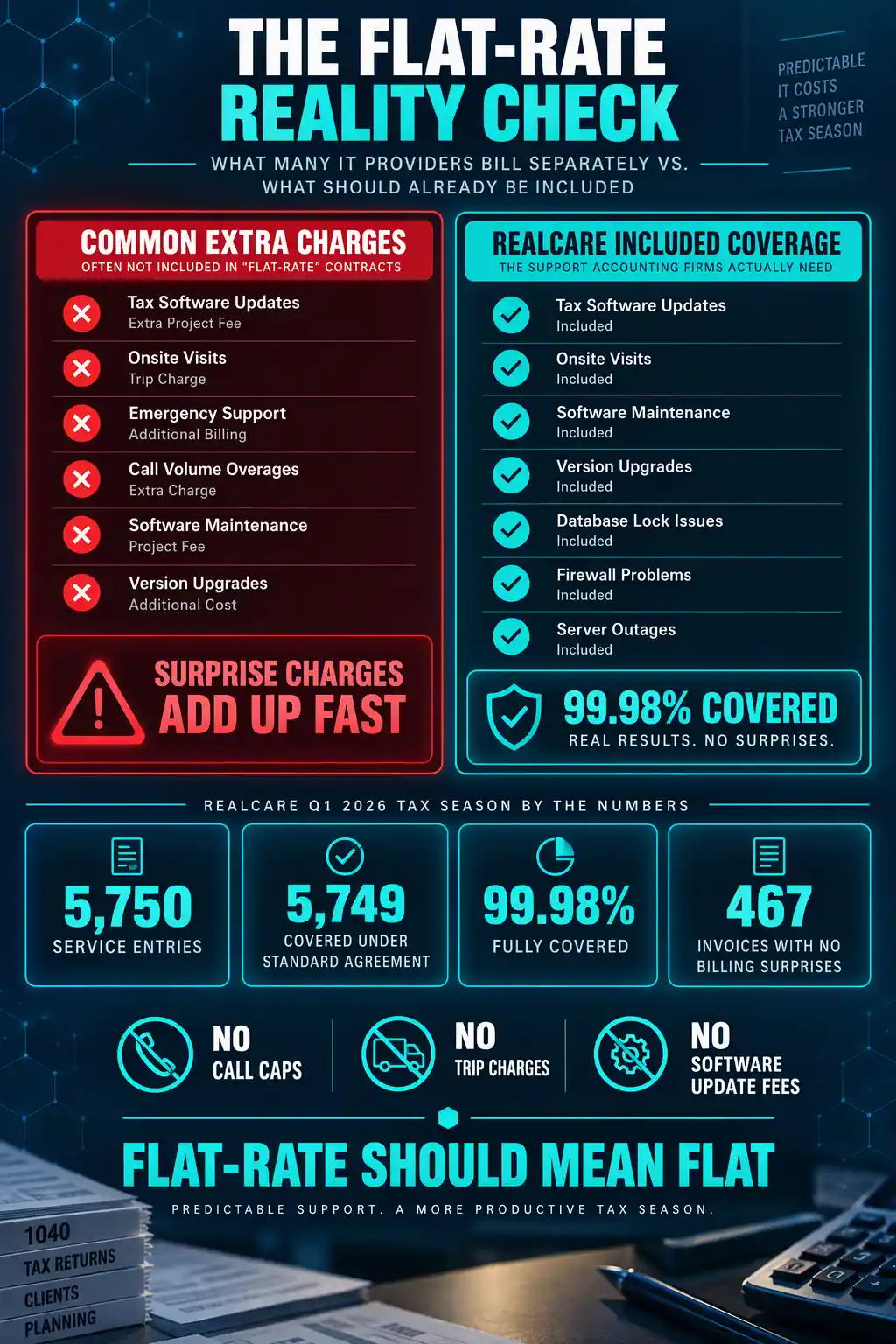
This is the trap many accounting firms fall into, often not realizing it until the bill arrives. The base seat price looks clean on paper. Then the fine print starts carving out exceptions: software upgrades are “projects,” onsite visits are extra, and once you’ve used your five included calls this month, the sixth one starts the meter running.
CPAs track every minute and every dollar for a living. Nothing undermines trust in a vendor faster than an invoice that doesn’t match the quote you were sold on.
Most MSPs don’t set out to nickel-and-dime a client. The pricing structure just makes it almost unavoidable. Cap the number of calls, charge for onsite dispatch, bill software upgrades as separate projects, and the base rate can stay artificially low on the sales call. The real cost shows up three months in, once the firm is already locked into a contract.
For an accounting firm, that’s budget variance in its purest form, the exact thing a managing partner spends all year trying to eliminate everywhere else in the business. You can forecast payroll. You can forecast rent. You shouldn’t have to budget a guess for IT.
What Does True Flat-Rate IT Actually Look Like?
We pulled our own records for Q1 2026, January 15 through April 15, the heart of tax season, to check our own claims against the real numbers rather than just assert them.
During the heart of tax season, January 15 through April 15, 2026, our team logged 5,750 total service entries across our RealCare managed service clients, all under our all-inclusive coverage, Monday through Friday, 7am to 6pm. Of those, 5,749, or 99.98%, were fully covered under the standard flat-rate agreement, with zero additional billing. We handled server outages, firewall issues, multi-user database locks, and software upgrades under the same flat coverage, not as separate projects.
We sent 467 monthly invoices to managed clients that quarter, and everyone matched the month before. No trip charges for onsite visits in Kent County. No mileage fees. No “you’ve used your calls for the month” conversation.
That staff accountant’s $450 surprise charge for a routine CCH Axcess update doesn’t happen under our model, because routine application maintenance and tax software version updates are built into standard coverage, not billed as a separate project.